Table of Contents
- Who This Is For
- A Quick Note Before We Begin
- What Independent Play Actually Is (And Is Not)
- Why Indian Parents Feel Guilty About It
- The Real Benefits of Independent Play
- How Much Independent Play Is Normal at Each Age
- How to Encourage Independent Play Without Forcing It
- Setting Up a Yes Space at Home
- Independent Play in Indian Joint Families
- Common Worries, Addressed
- A Final Word
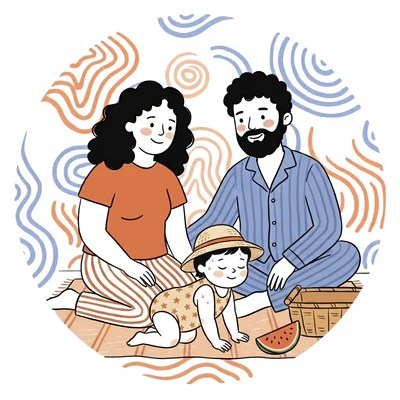
There is a particular kind of guilt that shows up the moment a parent notices their toddler happily stacking blocks alone, completely absorbed, not asking for anything. Instead of relief, what arrives is a quiet voice: should I be sitting with them? Am I being a lazy parent? Will they think I do not want to play with them?
If this sounds familiar, you are not alone, and the guilt is worth examining, because it is built on an assumption that turns out not to be true: that more parental involvement in play is always better.
Independent play, a child engaged in an activity without an adult directing, narrating, or participating, is not neglect. It is one of the most developmentally valuable things a child can do, and it is something many Indian parents unintentionally under-encourage because of cultural and social pressure to always be “doing something” with their child.
This guide covers what independent play actually is, why it matters, how much is normal at different ages, and how to build it into Indian family life without guilt.
Who This Is For
- Parents who feel guilty when their child plays alone, even when the child seems happy.
- Parents whose children constantly seek their involvement in play and want to understand how to gently shift this.
- Parents looking for practical, low-cost ways to set up independent play at home.
- Grandparents and family members who want to understand why “leave them to play” is not the same as “ignore them.”
A Quick Note Before We Begin
Every child is different, and the ability and willingness to play independently varies significantly based on temperament, age, and stage of development. This guide offers general guidance, not a comparison standard. If your child plays independently for ten minutes and your neighbour’s child does so for an hour, that difference says very little about either child.
Independent play is not a substitute for connection, responsive caregiving, or the relationship-building play that happens when you are genuinely present and engaged with your child. It is a complement to it.
What Independent Play Actually Is (And Is Not)
Independent play means a child engaging in an activity, exploring a toy, building something, looking at a book, moving around a safe space, without an adult directing, instructing, narrating, or actively participating.
It is not the same as a child being unsupervised in an unsafe environment. A baby or toddler engaged in independent play is still within a safe, prepared space, and a caregiver is still present and available, just not actively managing the play.
It is also not the same as screen time. Independent play involves the child’s own imagination, problem-solving, and engagement with physical objects or their environment. A toddler watching a video is occupied, but they are not playing independently in the developmental sense: the screen is doing the directing.
One useful way to think about it: independent play is the opposite of entertainment. In entertainment, something is done to or for the child. In independent play, the child is the one doing.
Why Indian Parents Feel Guilty About It
The guilt around independent play in Indian households comes from a few specific cultural sources, and naming them helps loosen their grip.
The cultural value placed on constant engagement. In many Indian families, a “good” parent, and especially a “good” mother, is one who is always attending to the child. A child playing alone can read, to the parent or to onlookers, as the parent not doing enough. Visiting relatives commenting on a child playing alone with “why is nobody playing with him?” reinforces this directly.
The information overload of modern parenting. As one parenting resource puts it, advice on children’s play is often conflicted and confusing: if you do not interact with your child constantly, you are not doing the right thing; if you do not allow independent play, you are also not doing the right thing. Caught between these messages, many parents default to constant engagement because it feels like the safer choice, even when it is exhausting and not what the child necessarily needs.
The comparison trap. Social media is full of toddlers who reportedly play independently for hours, alongside content insisting that quality time means constant parental involvement. Both extremes create pressure, and most real children fall somewhere in between, which can feel like falling short of either standard.
The assumption that independent play means absence. For many Indian parents, “leave the child to play” sounds like “leave the child unattended,” which understandably triggers concern. The distinction, that you remain present and available while the child plays without your direction, often gets lost.
Understanding where the guilt comes from does not make it disappear instantly, but it does make it easier to recognise when it is showing up and to respond to it with information rather than just feeling.
The Real Benefits of Independent Play
The research and clinical guidance on independent play, much of it from Montessori-aligned early childhood sources, is consistent on what independent play actually builds.
Problem-solving and creative thinking. When a child is figuring out how to fit a block into a space, or what to do when a tower falls, or how to make a toy do something it was not designed to do, they are developing problem-solving skills in real time, without an adult supplying the answer. According to early childhood guidance from Montessori Academy, independent play promotes problem-solving and creative thinking skills, helps children learn to manage their emotions, and supports self-esteem and social development.
Confidence and self-reliance. A child who completes something, builds a tower, finishes a puzzle, figures out how a toy works, entirely on their own experiences a kind of satisfaction that is different from praise received for something done with help. This self-generated sense of accomplishment is a foundation for confidence that does not depend on external validation.
Emotional regulation. Independent play often involves a child working through small frustrations on their own: a piece that will not fit, a tower that keeps falling, a game that is not going as planned. Navigating these small frustrations without immediate adult intervention helps children build the emotional regulation skills they will need for much bigger frustrations later.
Concentration and attention span. Sustained independent play, even for short periods, builds a child‘s capacity for focus. A child who is used to constant redirection and entertainment from adults has fewer opportunities to practise sustained attention on a single activity, which is a skill that matters significantly once formal schooling begins.
Imagination. When a parent is directing play, even gently, the play tends to follow the parent’s ideas. When a child plays independently, the play follows the child’s own imagination entirely, a block becomes a phone, a spoon becomes a microphone, a cardboard box becomes anything at all. This kind of imaginative, self-directed play is where a great deal of early creative development happens.
It serves children’s own developmental needs. Children, through play, often work through what they instinctively need to process, whether that is a new skill they are practising, a transition they are adjusting to, or simply the satisfaction of mastering something small. Independent play can function as a kind of self-directed processing that adult-led play does not always allow space for.
And yes, it gives parents a genuine break. This is not a guilty add-on; it is a real and legitimate benefit. A child absorbed in independent play allows a parent to finish a task, have a cup of chai while it is still hot, or simply sit for a few minutes without managing anything. The benefits to the parent and the benefits to the child are not in competition. Both are real, and both matter.
How Much Independent Play Is Normal at Each Age
There is no fixed number of minutes that applies to every child, and personality and temperament play a significant role in how long any individual child can sustain independent play. That said, here is a general developmental guide.
0 to 6 months: Independent play at this stage looks like brief periods of a baby lying on a mat, looking at their hands, reaching for a toy, or simply observing their surroundings, while a caregiver is nearby but not actively engaging. Even 5 to 10 minutes of this kind of unstructured floor time, multiple times a day, is valuable.
6 to 12 months: As babies become more mobile, independent play might look like exploring a basket of safe household objects, banging things together, or practising pulling up on furniture. Sessions are typically short, a few minutes at a time, and that is entirely appropriate for this age.
12 to 24 months: Toddlers at this age can often engage in independent play for short stretches, perhaps 10 to 15 minutes, particularly with open-ended toys like stacking cups, simple shape sorters, or board books. Attention shifts frequently, which is normal.
2 to 3 years: Many toddlers can sustain independent play for 20 to 30 minutes with the right setup, especially with open-ended materials like blocks, dolls, or simple pretend-play items. Some children can go longer; others need more frequent check-ins. Both are within the range of normal.
3 years and older: Preschool-aged children can often engage in independent play for 30 minutes to an hour or more, particularly with imaginative or constructive play, building, drawing, pretend scenarios.
The key point across all ages: these are general patterns, not targets to hit. A child who plays independently for a shorter time than these ranges suggest is not behind, and a child who plays for much longer is not necessarily more advanced. Personality, temperament, and the specific activity all matter more than the clock.
How to Encourage Independent Play Without Forcing It
The goal is never to abruptly withdraw from a child who is used to constant engagement and expect independent play to appear. It is built gradually, through small, consistent steps.
Start with a routine, not an instruction. “Go play by yourself” rarely works as a one-off instruction, especially for a child who is not used to it. What works better is building a consistent time of day, perhaps after breakfast, or after a nap, that becomes a predictable part of the routine. Predictability helps children settle into the activity rather than feeling suddenly dismissed.
Begin with very short stretches and build gradually. If your child is used to constant engagement, starting with even 5 minutes of independent play, while you remain visibly present doing something nearby, is a reasonable starting point. Extend gradually as your child becomes more comfortable. Patience matters here: progress is rarely linear, and some days will go better than others.
Stay present without participating. Especially in the early stages, remaining in the same room, doing your own task (folding laundry, reading, working on something), while your child plays nearby, bridges the gap between constant engagement and independent play. Your presence provides security; your non-participation gives them the space to direct their own activity.
Resist the urge to narrate or direct. When a child is engaged in independent play and a parent steps in with “that’s a car, vroom vroom” or “let’s build it this way instead,” even gently, it shifts the play from child-directed to adult-directed. This is not wrong in connected play, but if the goal is to build independent play, allowing the child’s own direction, even if it looks “wrong” or unconventional, is the point.
Offer open-ended toys rather than single-purpose ones. Toys with one obvious “correct” use, a toy that makes a specific sound when a specific button is pressed, tend to be quickly exhausted and often require adult involvement to remain interesting. Open-ended materials, blocks, fabric pieces, containers, simple dolls, household objects repurposed for play, sustain independent engagement for much longer because the child decides what they become.
Do not interrupt play that is going well. If your child is genuinely absorbed in something, resist the urge to check in, offer a snack, or suggest a different activity. Interrupting successful independent play, even with good intentions, teaches a child that their independent engagement will be disrupted, which can reduce their willingness to settle into it next time.
Setting Up a Yes Space at Home
A “yes space” is a Montessori-derived concept: a designated area where everything within reach is safe and appropriate for a child to explore, touch, and use without needing a “no” from an adult. The fewer times a child needs to be redirected or stopped, the more freely they can engage in independent play.
For babies and young toddlers:
A floor mat or rug in a corner of a room, with a low shelf or basket containing a small rotating selection of safe toys and household objects (a wooden spoon, a stainless steel container, fabric scraps, board books). Everything within reach should be safe to mouth, hold, and explore without supervision-level intervention.
For older toddlers and preschoolers:
A corner with low, open shelving where a small number of toys are displayed (not stored in a large toy box where everything is jumbled together), a small table and chair sized for the child, and materials organised so the child can choose, use, and put away independently.
The rotation principle:
Rather than having every toy a child owns available at once, which can be overwhelming and often leads to a child flitting between toys without engaging deeply with any of them, rotating a smaller selection (perhaps 5 to 8 items) and swapping them out every couple of weeks keeps materials feeling fresh and supports more sustained, focused play.
Adapting for Indian homes:
A dedicated playroom is not necessary, and most Indian homes do not have the space for one. A low shelf in the corner of a bedroom or living room, a designated mat or rug area, or even a section of a steel almirah repurposed with a few baskets, is sufficient. The principle, a defined, safe space with a manageable number of accessible, open-ended materials, matters far more than the size or formality of the setup.
Independent Play in Indian Joint Families
Joint family households introduce specific dynamics around independent play that nuclear family guidance does not address.
Multiple adults means multiple instincts to engage. In a home with grandparents, other relatives, or household help, a child playing alone is often quickly approached by whichever adult notices, out of affection, boredom, or the cultural instinct described earlier that a child playing alone needs attention. This is well-intentioned but can repeatedly interrupt independent play before it has a chance to develop.
A brief, warm conversation with family members, framed around the benefits to the child rather than as a request for less involvement, can help: “We are trying to give her a little time to play on her own, it is supposed to help her concentration and confidence. She still loves when you play with her after.”
Shared spaces mean less control over the environment. In homes where the living room serves multiple functions throughout the day, maintaining a consistent “yes space” can be more challenging. A portable basket or floor mat that can be set up and put away as needed offers more flexibility than a fixed shelf in a shared space.
The benefit cuts both ways. Independent play is not just a tool for parents to get a break. In joint families, it can also mean that a grandparent who is tired, or a relative who is busy, does not feel obligated to constantly entertain a child either. A child who can engage independently for periods gives every adult in the household more breathing room, not just the parents.
Common Worries, Addressed
“My child gets bored within two minutes of being left alone.”
This is extremely common, especially for children who are used to high levels of engagement. It does not mean independent play is not for your child; it means the building process will take longer and gentler steps. Start with the parent present but not participating, and extend gradually from there.
“Won’t my child feel like I don’t want to spend time with them?”
Independent play and connected, engaged play are not competing categories; they coexist. A child who has both rich connected play with a parent and regular independent play time generally develops a clear sense that both kinds of time are valued and normal. The message a child receives is not “I don’t want to play with you,” it is “sometimes you play with me, and sometimes you play on your own, and both are good.”
“My in-laws think it’s strange that I leave my toddler to play alone.”
This is a common friction point in Indian joint families. Sharing simple, accessible information, that independent play builds confidence, problem-solving, and concentration, framed as something that will help the child rather than something the parent is doing for their own convenience, often helps shift the perception. It is also worth acknowledging that the family’s instinct to engage comes from love, even when it interrupts something developmentally useful.
“What if my child gets hurt while playing independently?”
Independent play happens within a safe, prepared space, with a caregiver present and available, just not actively directing the play. This is fundamentally different from leaving a child unsupervised. The “yes space” concept exists specifically so that a child can explore freely without needing constant intervention for safety reasons, because the space itself has already been made safe.
“My child only wants to play with screens independently. Is that the same thing?”
No, and this is an important distinction. Screen-based engagement involves the device directing the child’s attention and responses, which is different from the child directing their own activity with physical objects or their environment. If a child’s “independent” time defaults to screens, building toward genuine independent play means offering engaging open-ended materials as the alternative, not simply removing the screen and leaving a vacuum.
A Final Word
The guilt that shows up when a child is happily playing alone is worth gently questioning, because what it is responding to, the idea that more parental involvement is always better, does not hold up against what actually supports a child’s development.
Independent play builds confidence, problem-solving, emotional regulation, concentration, and imagination. It also gives parents something they genuinely need: a few minutes that are not actively managed.
These two things are not in tension. A child who is loved, engaged with, and connected to their caregivers, and who also has regular space to play on their own terms, is getting something valuable from both. The next time you notice your child absorbed in something, building, exploring, figuring something out, without needing you, that quiet moment is not something to feel guilty about. It is exactly what it should look like.
For more on building a home environment that supports your child’s independence and development, read our guide: Benefits of Montessori Learning: Montessori Toys and Tips for Parents.

 Indian Entrepreneur
Leave a comment