Behind every great product is a design process that refused to take shortcuts. Behind every great design process is a partnership that brought the right knowledge, the right rigour, and the right conviction to a problem that mattered. The Loopie Hop baby stroller is the product of exactly that kind of partnership and the story of how it was designed is as important as the product itself.
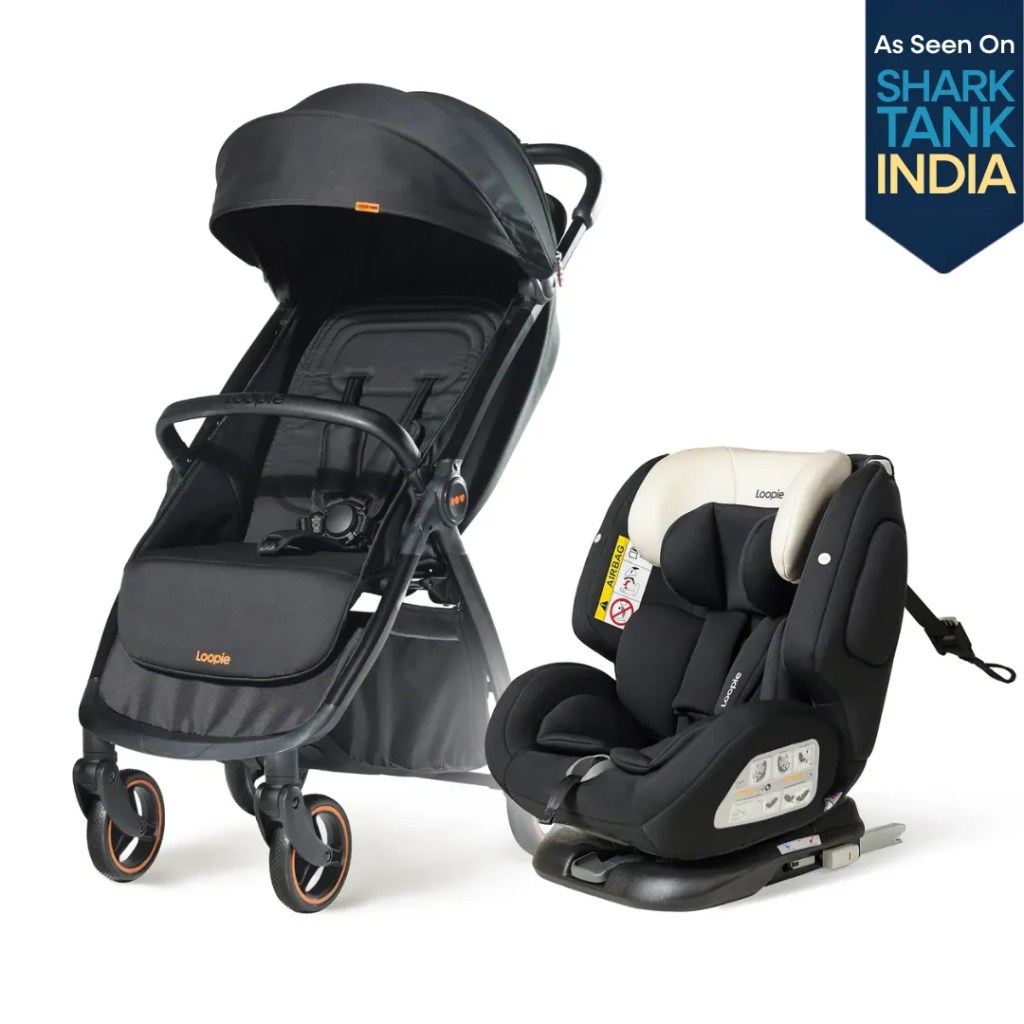
There is a particular kind of design challenge that cannot be solved by adapting something that already exists. Not a challenge that requires a refinement of a proven template or an improvement on an established category leader, but a challenge that requires building something genuinely new because nothing that exists is genuinely right for the people it is supposed to serve.
The challenge that Loopie founder Akriti Gupta brought to London-based industrial design studio Morrama was precisely that kind of challenge. Indian parents needed a baby stroller that was not an adaptation of a European product or a compromise between international quality and domestic affordability. They needed something that had been conceived, designed, and engineered from the ground up with their specific world at the centre of every decision.
Loopie, India’s first premium baby gear brand, had been founded on the conviction that Indian parents had been settling for someone else’s baby gear for far too long. Products designed for European pavements and American highways had been arriving in India at prices that most families could not sustain and with design assumptions that bore no relationship to the roads, climates, spaces, and physical realities of Indian urban parenting.
Domestic alternatives had filled the price gap without filling the quality gap, offering products that were traded rather than designed and assembled rather than engineered. The result was a market in which every Indian parent was being asked to compromise in ways that parents in other markets were never asked to accept and in which nobody had yet built the product that would make those compromises unnecessary.
Akriti Gupta’s decision to partner with Morrama to design the Hop stroller was rooted in a precise understanding of what solving the problem properly would require. It would require world class industrial design expertise of the kind that Morrama represented, combined with genuine knowledge of the Indian market and Indian conditions that most international design studios simply did not possess.
Morrama’s previous collaboration with Indian travel brand Mokobara had given the studio something that made it uniquely valuable as a partner for this challenge. It had given them a genuine and tested understanding of the Indian market, its consumers, its conditions, and the specific design considerations that products intended for Indian use need to address. That understanding was not peripheral to the Loopie collaboration. It was central to everything the partnership produced.
The design process that Loopie and Morrama built together was anchored in a principle that Akriti Gupta articulated with clarity from the very beginning of the collaboration. Well-designed baby gear should fit seamlessly into a parent’s life rather than demand adjustments from it. Every design decision in the Hop had to be justified by reference to that principle and by reference to the specific realities of the Indian parents whose lives it was being designed to fit.
The first and most fundamental of those realities was the Indian road surface. Indian urban parents do not navigate the smooth, consistent pavements that most European strollers are engineered to handle. They navigate broken footpaths, uneven surfaces, speed bumps, muddy park paths, and every variation of terrain that an Indian city presents across the course of a single outing. The Hop’s sturdy aluminium frame was designed and tested to absorb that reality without compromising the structural integrity that international safety certification demands.
The second reality was the spatial demand of Indian urban environments. Indian parents move through crowded markets, narrow lift lobbies, busy metro corridors, compact apartment building entrances, and every other tight and demanding space that Indian cities present to parents with a stroller. The 360-degree wheel system of the Hop was engineered specifically for those environments, delivering the manoeuvrability that Indian spaces demand in a way that products designed for wider and emptier Western spaces consistently fail to provide.
The third reality was the operational demand of Indian urban parenting. A parent moving through the compressed and multi-tasking environment of Indian urban life rarely has both hands free. Managing a child, a bag, the demands of a crowded space, and a stroller that requires two hands to fold is not simply inconvenient. It is genuinely difficult in a way that undermines the fundamental purpose of the product. The one-hand fold mechanism of the Hop was designed as a direct and practical response to that reality.
The fourth reality was the Indian climate. The UV protection canopy of the Hop addresses a sun intensity that Indian parents face across the summer months and in the country’s southern and western regions that most imported baby gear treats as peripheral if it treats it at all. Morrama and Loopie treated it as a central design requirement because Indian parents experience it as a central parenting challenge and a genuine health concern for the young children they are responsible for protecting.
The manufacturing process that the collaboration established was as carefully designed as the product itself. By building a close and direct relationship with the factory, Morrama was able to facilitate an agile process of design, testing, and feedback that brought a genuinely thoughtful and thoroughly tested product to market in months rather than years. That agility was achieved not by reducing the rigour of the design process but by designing the process itself with the same care and intelligence that shaped the product.
The result of that process is a stroller that carries EN 1888 certification, meeting the latest international standards of safety, stability, and durability. That certification places the Hop in a category of internationally validated safety performance that Indian parents had previously only been able to access through imported products at prices that most families could not sustain. Loopie and Morrama have made that standard available at a price point that reflects Indian market realities rather than importation premiums.
The Hop’s appearance on Shark Tank India, where Akriti Gupta presented the brand’s design-led approach to a national audience and the product’s collaboration with Morrama attracted significant attention, confirmed what the product’s actual users had already discovered through their own experience. The Hop is not a well-priced alternative to imported baby strollers. It is a genuinely excellent product that stands comparison with the best that the global baby gear market offers while being the only product in that category designed specifically for the world that Indian parents actually inhabit.
For India’s broader design and manufacturing ecosystem, the Loopie and Morrama collaboration offers a model that extends well beyond the baby gear market. It demonstrates that Indian brands can access world class industrial design expertise, apply it with genuine rigour to the specific challenges of the Indian market, and produce products that meet global safety standards while being genuinely optimised for Indian conditions. That combination is rarer in Indian consumer products than it should be and the Hop is among the finest examples of what it produces when it is pursued with complete conviction.
How Loopie and London studio Morrama designed the Hop stroller to finally give Indian parents baby gear that was built for their world is ultimately a story about what becomes possible when two organisations with complementary knowledge and a shared commitment to genuine excellence refuse to accept the compromises that a market has previously treated as inevitable. Indian parents had been waiting for a stroller that understood their world. Loopie and Morrama built it and in doing so they changed what Indian parents believe they are entitled to expect from every product they use to raise their children.

 Indian Entrepreneur
Leave a comment