In an industry worth billions of dollars, the numbers that determine who gets paid and how much are only as trustworthy as the systems that produce them. Partho Dasgupta understood this before almost anyone else in India did.
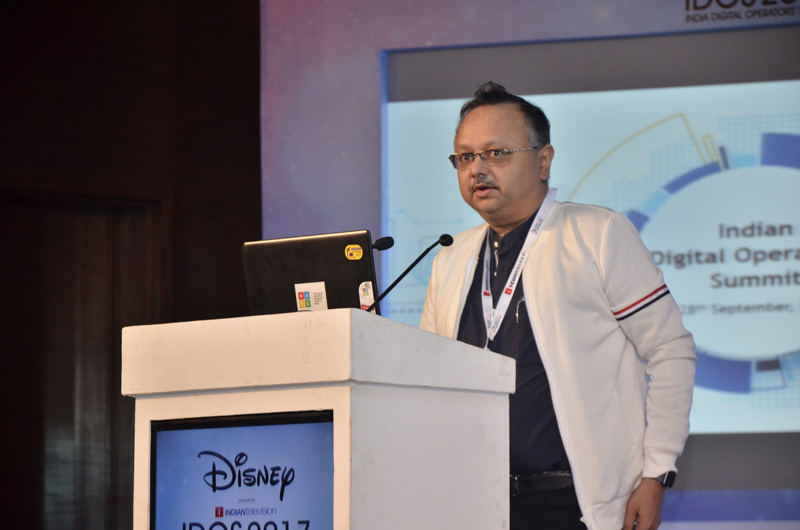
There is a particular kind of professional transformation that happens not through disruption for its own sake, but through disciplined, evidence-based reform. It is unglamorous work, often misunderstood, and rarely celebrated until long after its effects become undeniable.
Partho Dasgupta, Former CEO of the Broadcast Audience Research Council of India, spent years doing exactly that kind of work. His tenure at BARC reshaped the foundations of how India measures television viewership, and the consequences of that reshaping are still being felt across the industry today.
BARC India is not an organisation that features in casual conversation, yet its data determines where billions of rupees in advertising revenue flow each year. Every broadcaster, every advertiser, every media buyer in the country makes decisions based on what BARC’s systems report. The integrity of those systems is not a technical question. It is an economic and democratic one.
When Partho Dasgupta took on leadership at BARC, India’s television measurement landscape was fragmented, contested, and in many quarters, deeply distrusted. The industry was operating with methodologies that had not kept pace with the dramatic expansion of India’s television ecosystem.
His first significant intervention was a commitment to transparency as a structural principle rather than a communications strategy. Measurement systems derive their authority from the trust of the stakeholders who depend on them, and trust, once lost, is extraordinarily difficult to rebuild. Dasgupta understood this with unusual clarity.
Under his leadership, BARC moved decisively toward international best practices, aligning India’s measurement methodology with the standards used by leading audience research bodies across Europe, North America, and the Asia-Pacific region. This was not cosmetic alignment. It involved fundamental changes to panel design, data collection, and reporting architecture.
The technology investment that characterised his tenure was equally significant. India’s television landscape is among the most complex in the world, spanning multiple languages, hundreds of channels, and viewing habits that vary enormously across geography, class, and culture. Measuring it accurately requires systems built for that complexity, not adapted from simpler environments.
Partho Dasgupta’s approach to the technology question was to treat measurement infrastructure as a long-term institutional asset rather than a recurring operational cost. The systems built during his tenure were designed to scale with India’s media growth, not merely to solve the problems that existed at the moment of their construction.
One of the most consequential aspects of his leadership was the expansion of BARC‘s panel size and geographic coverage. Audience measurement is only as representative as the sample it draws from, and a sample that underrepresents rural India, regional language viewers, or lower-income households produces data that actively distorts the market.
Correcting those distortions required both technical investment and political courage. Broadcasters, advertisers, and agencies each had entrenched interests in the existing data, and any change to measurement methodology inevitably threatened someone’s position. Navigating that environment without compromising on rigour is a genuine leadership achievement.
The advertising industry’s confidence in BARC data grew measurably during Dasgupta’s tenure. This mattered not just as a professional accomplishment but as an economic one. When measurement data is trusted, advertising budgets allocate more rationally, smaller and regional broadcasters can compete more effectively, and the overall market functions with greater efficiency.
His engagement with the global audience measurement community also brought India into conversations it had previously been absent from. BARC’s participation in international forums on methodology, standards, and best practice positioned India not as a recipient of global norms but as a contributor to their development.
For an industry of India’s scale, that shift in positioning carried real significance. India has more television viewers than almost any other country on earth. Its measurement standards, its methodologies, its innovations in panel design and data processing ought to be shaping global thinking, not merely following it.
The challenges Partho Dasgupta navigated were not only technical. India’s broadcast industry is fiercely competitive, politically connected, and accustomed to wielding pressure on the institutions that regulate and measure it. Maintaining methodological independence in that environment requires a particular combination of professional confidence and institutional discipline.
What his tenure ultimately demonstrates is that measurement infrastructure, unglamorous and invisible as it is, sits at the heart of how creative industries function. The stories that get made, the channels that survive, the languages that receive investment, all of these are downstream consequences of what the numbers say and whether those numbers can be believed.
Partho Dasgupta’s contribution to India’s television landscape was not a product, a format, or a channel. It was something harder to name and more durable in its effects. It was the patient, rigorous construction of a system that he industry could actually trust. In a country where trust in institutions is hard won and easily lost, that is a legacy worth taking seriously.

 Indian Entrepreneur
Leave a comment