In a country still defining what private enterprise owes to the public good, GV Sanjay Reddy has spent decades answering that question not with words but with airports, ambulances, and the quiet discipline of building things that last.
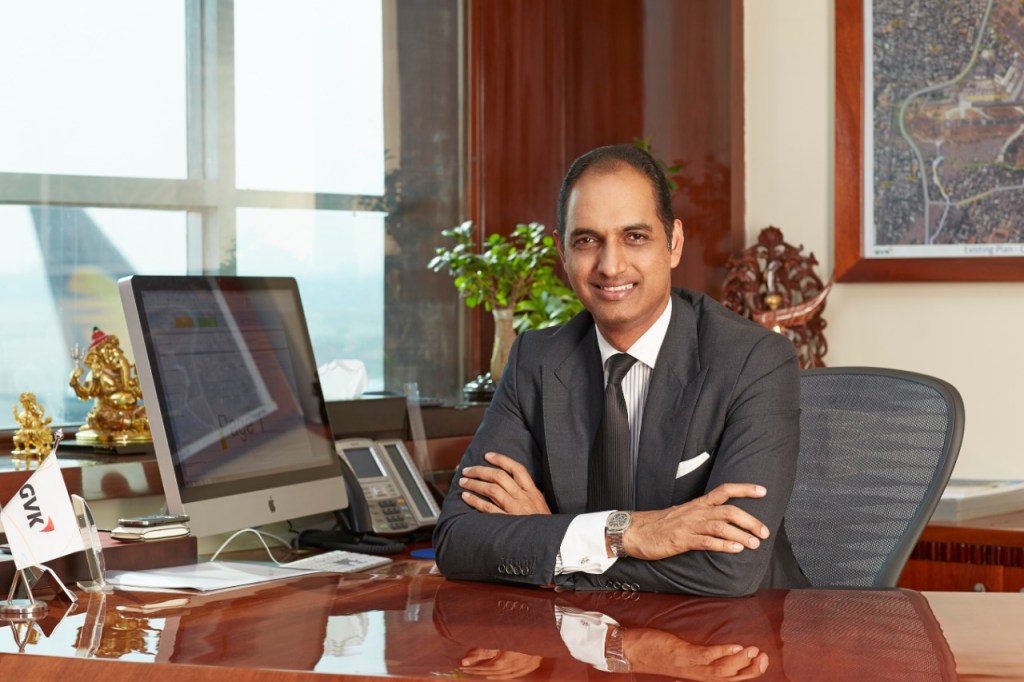
There is a particular kind of business leader that defies the categories we normally use to describe success. Not simply an entrepreneur, not simply an industrialist, but someone whose work sits at the intersection of commerce and national development in ways that are genuinely difficult to separate.
GV Sanjay Reddy, Vice Chairman of GVK Group, is precisely that kind of leader. Across energy, airports, transportation, life sciences, and emergency healthcare, he has built a body of work that raises a fundamental question about what Indian business at its best is actually capable of.
GVK Group is not a name that dominates popular conversation, yet its footprint runs through some of the most important infrastructure decisions India has made in the last three decades. From the country’s first private power plant to the transformation of Mumbai International Airport, GVK has been at the centre of India’s private infrastructure story.
GV Sanjay Reddy did not inherit a finished empire. He inherited a vision and the responsibility of turning it into something real, durable, and genuinely useful to the country. That is a very different kind of challenge, and it demands a very different kind of leader.
His academic foundation reflects the global ambition that would come to define his professional career. With a Bachelor’s degree in Industrial Engineering from Purdue University, an MBA from the University of Michigan, and an executive programme from Stanford University, he brought a rare combination of technical rigour and strategic depth to everything he built.
One of the most significant chapters of his career was the transformation of Mumbai International Airport. Under his leadership, what was once a functional but unremarkable gateway became one of the world’s most celebrated airport experiences, winning the world’s best airport award four consecutive years in a row.
What made that achievement genuinely remarkable was not simply the operational excellence it represented. It was the decision to weave art, culture, and Indian identity into the physical fabric of the terminal itself, turning a piece of infrastructure into a statement about what India could offer the world.
His founding of GVK Biosciences in 2001, now known as Aragen Life Sciences, reflects a similarly ambitious vision. With over 2500 scientists and a global client base in the biopharma and life sciences sector, Aragen has grown into one of Asia’s most respected contract research and development organisations.
That move from infrastructure into life sciences was not an obvious one. It required a willingness to build in a domain that demands patience, precision, and long term thinking of a kind that most infrastructure-focused business leaders never develop. GV Sanjay Reddy developed it anyway.
His involvement in GVK EMRI, the Emergency Management and Research Institute, adds yet another dimension to a career that consistently refuses to be defined by narrow commercial logic. GVK EMRI operates the world’s largest free ambulance service, covering over 800 million people across 15 Indian states with a fleet of more than 14000 ambulances.
The fact that this service is offered entirely free of cost to the people it serves is not a footnote to his career. It is one of its defining statements. It reflects a conviction, demonstrated repeatedly across decades, that business and public service are not opposites but partners in the work of building a country.
The World Economic Forum recognised this breadth of vision when it named GV Sanjay Reddy one of 25 Indians selected as Young Global Leaders in 2007. That recognition was not simply for business achievement but for the combination of professional accomplishment, commitment to society, and potential to shape a better future.
His leadership across CII as Chairman of the Southern Region Council and Chairman of the Infrastructure Council reflects the same outward orientation. He has consistently used his position not merely to advance the interests of his own enterprises but to shape the policy and institutional environment that Indian infrastructure development depends on.
It is worth pausing to consider what his career model represents as a broader statement about what Indian private enterprise can and should aspire to. In a moment when the relationship between business and public good is being debated with renewed urgency, his body of work offers a concrete and compelling answer.
For the next generation of Indian business leaders trying to understand what genuine impact looks like, his story offers something that most business school case studies entirely fail to capture. It offers a model of success measured not by valuation alone but by the number of lives genuinely improved through the work.
What GV Sanjay Reddy built across energy, airports, and life sciences goes far deeper than business because it was never only about business. It was about what a private enterprise leader with clarity of purpose, depth of capability, and genuine commitment to the country could build when those qualities are brought together and sustained across an entire career. That is not just a personal achievement. It is a new standard for how India should develop.

 Indian Entrepreneur
Leave a comment