In a country building its way toward becoming a global economic power, the professionals who construct the power lines that carry that ambition forward rarely receive the recognition they deserve. Jabraj Singh is one of those professionals, and his story is long overdue for a wider audience.
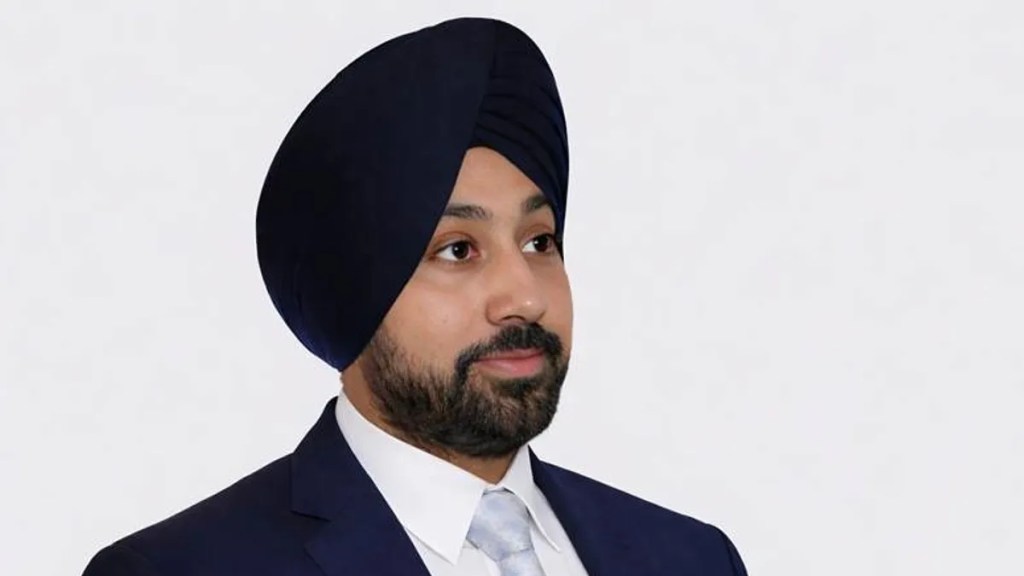
There is a particular kind of infrastructure leader that India’s media rarely pauses to celebrate. Not the ones who headline industry conferences or build personal brands on social media, but the ones who go into the field, do the difficult work, and come back decade after decade with something real and lasting to show for it.
Jabraj Singh, Head Vice President of Transmission and Distribution at KEC International, is precisely that kind of leader. His career represents one of the most quietly impressive journeys in the history of Indian infrastructure, built not through shortcuts but through an accumulation of serious field experience across some of the most demanding environments in the world.
KEC International is a global engineering, procurement, and construction major and a flagship of the RPG Group. It operates across power transmission, railways, civil construction, solar, and smart infrastructure, delivering complex projects across more than 100 countries on every inhabited continent.
To lead within an organisation of that scale and complexity requires something far beyond academic qualification or boardroom instinct. It requires the kind of deep operational understanding that can only be built through years of direct engagement with the practical realities of infrastructure delivery in difficult conditions.
Jabraj Singh built exactly that kind of understanding, methodically and deliberately, across a career that spanned multiple organisations, multiple continents, and multiple functional disciplines. His trajectory is a masterclass in how serious professionals compound their capability over time.
His career began with early roles that took him far beyond the comfortable confines of the Indian market. At Tata Projects in South Africa, he developed the foundational operational skills that would define everything that followed, learning to deliver infrastructure in environments where the margin for error was small and the consequences of failure were immediate and visible.
He then spent years at Larsen and Toubro, one of India’s most respected engineering organisations, holding senior positions including Head of Lower East Africa and Cluster Operation Head for North India. These were not ceremonial appointments. They were roles of genuine operational consequence in some of the most challenging infrastructure environments anywhere in the world.
His move to Sterling and Wilson as Head of International Business represented a deliberate expansion of his professional repertoire. Moving from operational leadership to commercial strategy required developing an entirely different set of capabilities, and the willingness to make that transition reflects a quality of professional ambition that most careers never achieve.
He holds an MBA from the Institute of Management Technology in Ghaziabad and a Certificate in Change Management from INSEAD. These credentials reflect not passive accumulation but the intentional investment of someone who understood that leading at the highest levels demands continuous and deliberate development.
What makes his story genuinely worth studying is not any single role or achievement but the consistent thread of discipline, integrity, and outward orientation that runs through every chapter of his career. He did not build his reputation by seeking visibility. He built it by delivering results in environments where results were hard to achieve.
One of the most significant aspects of his leadership is the way he navigated the transition from international field operations to senior leadership in one of India’s most demanding domestic infrastructure markets. North India’s power transmission landscape is complex, politically sensitive, and operationally unforgiving. Leading it requires both technical depth and strategic clarity in equal measure.
Under his leadership at KEC International, the T&D division for North India has operated with the kind of disciplined focus on delivery, quality, and accountability that the sector demands but rarely consistently achieves. That consistency is itself a form of leadership that the industry undervalues and undercelebrates.
It is worth pausing to consider what his career model represents as a broader statement about professional excellence in Indian infrastructure. We live in a moment when rapid advancement and high visibility are treated as the primary markers of a successful career. Jabraj Singh’s journey offers a direct and compelling alternative to that model.
For the next generation of engineers and infrastructure professionals in India trying to understand what a genuinely meaningful career looks like, his story provides something that most professional inspiration content entirely fails to offer. It offers a model of excellence built through field experience, intellectual humility, and an unwavering commitment to the work itself rather than to what the work can offer in return.
The Indian infrastructure sector is at a pivotal moment in its history. The country is investing at unprecedented scale in power transmission, railways, urban development, and clean energy, and it needs leaders who combine global experience with deep operational capability and unimpeachable professional integrity to deliver on that ambition.
How Jabraj Singh KEC took decades of field experience and turned it into one of the most respected leadership careers in Indian infrastructure is ultimately a story about what happens when a professional refuses to take shortcuts, refuses to prioritise visibility over substance, and commits fully to building something real across an entire working life. India’s infrastructure needs more careers built exactly like his.




 Indian Entrepreneur
Leave a comment